
INJARO CONSULTING | HSA™ OPERATIONAL INTELLIGENCE PROGRAM
Service 04 - HSA™ Operational Intelligence Program
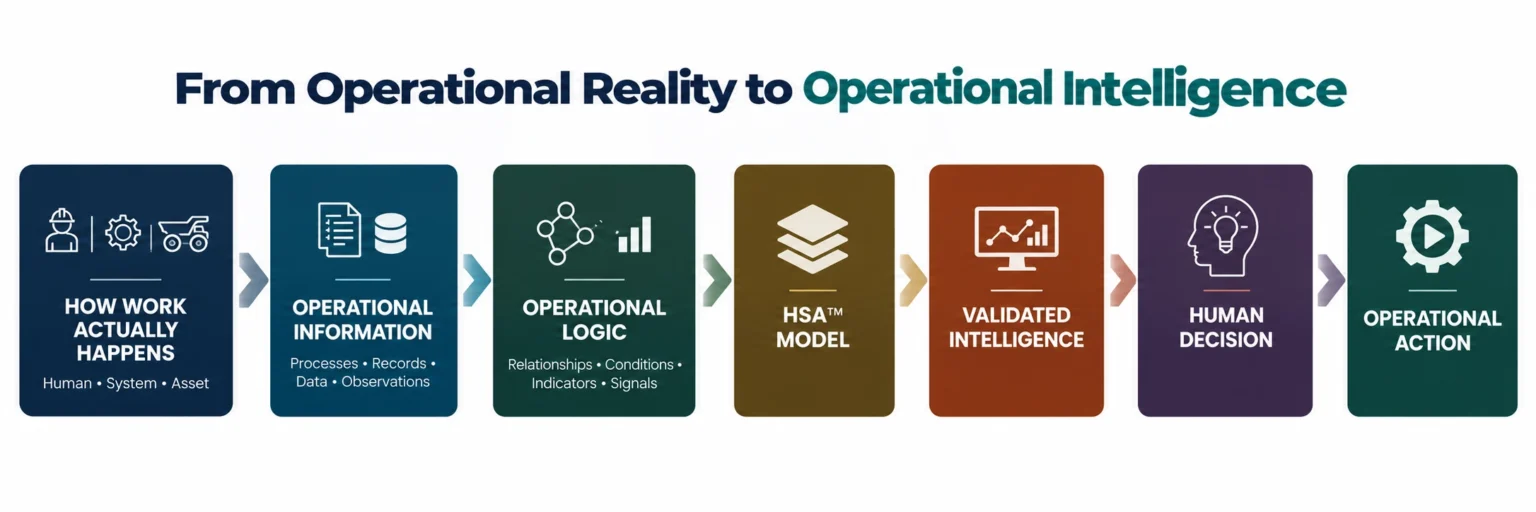
Build Operational Intelligence from How Your Operation Actually Works
How HSA™ Turns Operations into Intelligence
HSA™ is developed collaboratively with the client through five phases — from understanding how the operation actually works to validating and handing over an operational intelligence capability for continued use.
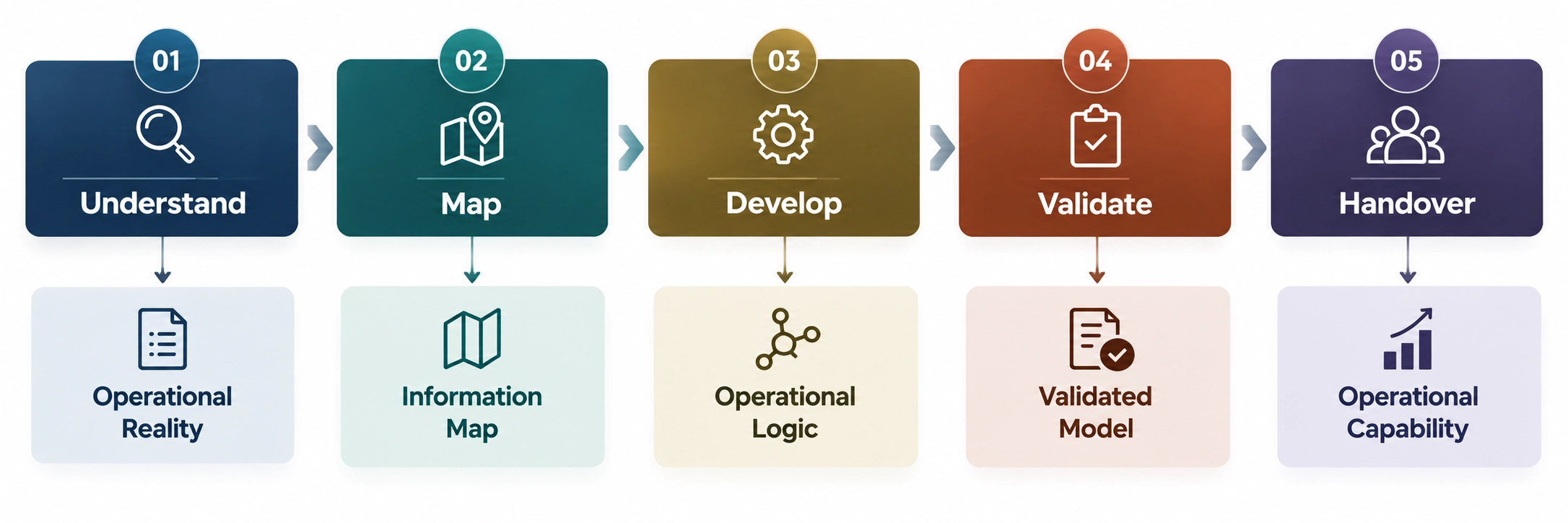
01 — Understand Your Operations
Establish how work is actually performed, where critical activities take place, and how people, systems, and assets interact across the operation.
02 — Map Existing Information
Identify what information the operation already generates, where it comes from, how it is captured, and what it can reveal about operational conditions.
03 — Develop & Confirm Operational Logic
Connect operational reality with existing information to define the logic, relationships, indicators, and signals that form the HSA™ model.
04 — Pilot & Validate
Test the model against real operational conditions, refine its logic with the client, and confirm that the intelligence produced is meaningful and usable.
05 — Operational Handover
Transfer the validated model, operating approach, and knowledge to the client so the capability can continue to be used and developed within the operation.
What You Receive
HSA™ Operational Intelligence Model
Operational Process & Information Map
HSA Operational Logic
Validated Indicators & Signal Framework
Intervention Logic
Validation & Pilot Findings
HSA Operating & Governance Guide
HSA Workforce Training & Handover
What HSA™ Can Reveal
HSA™ helps make operational conditions, patterns, and relationships visible that may otherwise remain fragmented across processes, people, systems, and data.
Operational Patterns
Identify recurring patterns in how work is performed and how operational conditions develop over time.
Deviations & Variations
Recognize differences between expected and actual operating conditions that may affect process reliability or critical controls.
Relationships & Contributors
Connect operational conditions with the information they generate to better understand relationships and potential contributing factors.
Weak Signals
Surface early indications of changing conditions that may warrant closer attention before they develop into more significant issues.
Control Conditions
Identify where critical controls, verification points, information flows, or escalation mechanisms may be weakening.
Intervention Signals
Provide structured signals that help operational leaders determine where human attention, review, or intervention may be warranted.
HSA™ Is Not a Replacement for Operational Improvement
When HSA™ May Not Be the Right Fit
HSA™ is designed for organizations that need to understand complex operational conditions and turn existing information into actionable intelligence. It may not be the right starting point when the need is more immediate or narrowly defined.
01 — A Specific Problem Is Already Known
If the issue is already clearly identified and requires a focused operational intervention, a targeted engagement may be more appropriate.
02 — Technology Is the Primary Need
If the primary objective is to acquire or implement a technology platform rather than develop operational intelligence, HSA™ may not be the right starting point.
03 — Operational Knowledge Is Not Yet Accessible
HSA™ depends on meaningful access to people, processes, and operational information. Without this access, the model cannot be reliably developed or validated.
04 — Improvement Is the Immediate Priority
If the organization primarily needs to correct a process, strengthen frontline performance, or address a known operational risk, one of INJARO's focused services may provide a more direct starting point.
If HSA™ Is Not the Right Starting Point
Not every operational challenge requires an intelligence model.
Where the need is more specific, INJARO can begin with a focused engagement in Operational Risk Diagnostic, Process & Workflow Optimization, or Frontline Performance & Intervention.
Operational Risk Diagnostic
Need to understand a specific operational risk condition?
Explore Operational Risk Diagnostic ServiceProcess & Workflow Optimization
Need to improve how work is designed and controlled?
Explore Process & Workflow Optimization ServiceFrontline Performance & Intervention
Need to strengthen execution at the frontline?
Explore Frontline Performance & Intervention ServiceReady to Explore HSA™?
You do not need to decide which engagement is right before speaking with us.
Tell us what you are experiencing, what you are trying to achieve, and where you believe the challenge lies.