INJARO CONSULTING | APPLIED CASE STUDY 02
Applied Case Study 02
An applied INJARO analysis based on the official investigation by the U.S. Chemical Safety and Hazard Investigation Board (CSB).
Source:
U.S. Chemical Safety and Hazard Investigation Board
Williams Geismar Case Study — No. 2013-03-I-LA
Incident:
Reboiler Rupture and Fire
Location:
Geismar, Louisiana, USA
Date:
June 13, 2013
The Incident
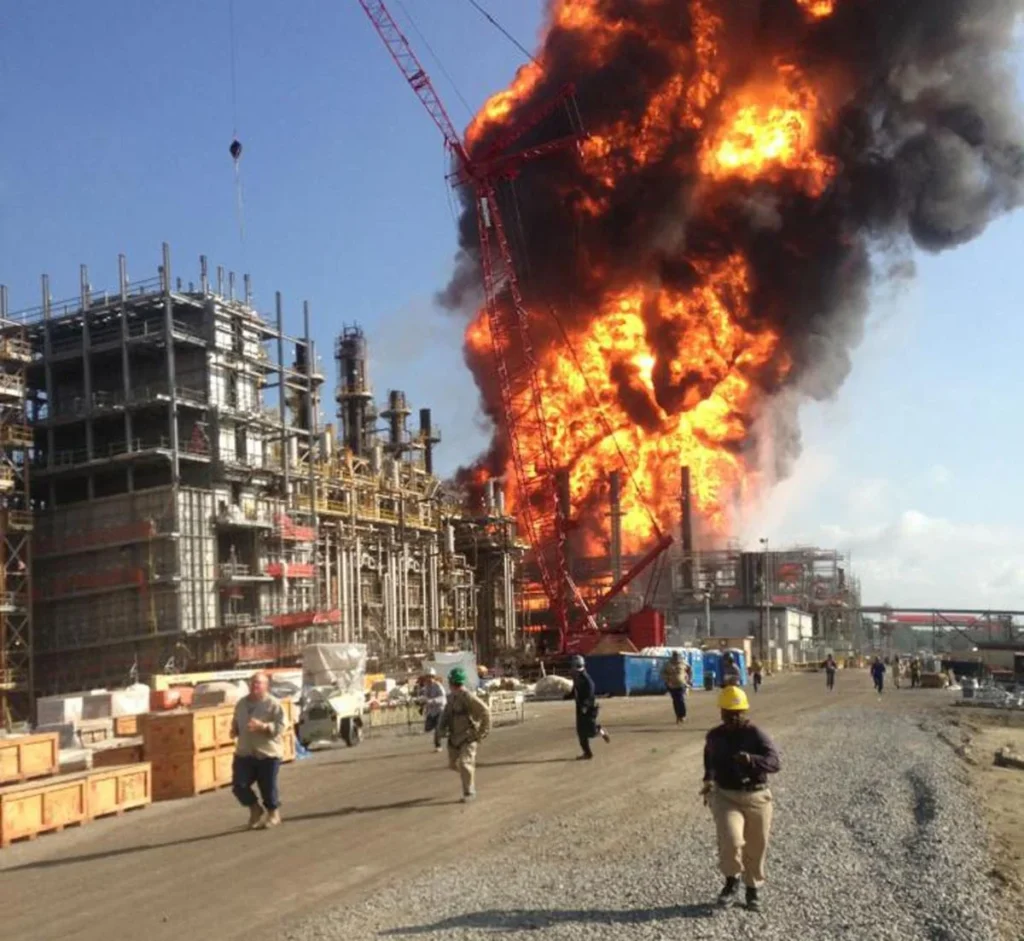
On June 13, 2013, a reboiler at the Williams Olefins Plant catastrophically ruptured during nonroutine operational activities.
The reboiler was offline and isolated from pressure relief protection. When hot quench water was introduced, liquid propane inside the vessel expanded, rapidly increasing internal pressure.
The rupture resulted in a Boiling Liquid Expanding Vapor Explosion (BLEVE) and fire. Two Williams employees were killed and 167 people reported injuries.
What the Investigation Established
The CSB investigation identified process safety management weaknesses that had developed over many years, including deficiencies in Management of Change, Process Hazard Analysis, Pre-Startup Safety Review, and operating procedures.
Process Change
Changes to the reboiler configuration created conditions in which the equipment could become isolated from pressure relief protection.
Hazard Analysis
A key overpressure protection recommendation was not effectively implemented. Later analysis relied on information indicating that the safeguard existed.
Operational Activity
The nonroutine activities performed on the day of the incident were not adequately analyzed for the overpressure hazard.
The findings above are based on the official CSB investigation. The analysis that follows is INJARO's applied interpretation.
The Incident Was Not a Single-Point Failure
The final rupture was the result of interacting conditions rather than a single failure.
Human
• Performance
• Awareness
• Decision-Making
System
• Management of Change (MOC)
• Process Hazard Analysis (PHA)
• Pre-Startup Safety Review (PSSR)
• Procedures
• Verification
Asset
• Reboiler
• Valves
• Pressure Protection
• Configuration
Operating Environment
• Standby
• Process Fluid
• Heat Introduction
• Isolation
Developing Risk
Risk emerged through the interaction of these conditions.
Human Performance Under Changing Conditions
The INJARO perspective:
How visible are changing operating conditions to the people making decisions?
Relevant INJARO service:
Frontline Performance & Intervention
Feature: Strengthen frontline capability to recognize conditions, intervene appropriately, and learn from outcomes.
The Operation Around the Frontline
Frontline decisions occur within a wider operational system.
The INJARO perspective:
Critical information must not only exist. It must be accurate, connected, and verified where decisions are made.
Relevant INJARO service:
Process & Workflow Optimization
Feature: Strengthen how critical work is structured, connected, verified, and controlled across the operation.
A Sound Asset Can Still Have Low Risk Tolerance
Asset condition and operational risk are not the same thing.
The INJARO perspective:
Risk can change with configuration, protection status, and operating condition.
Relevant INJARO service:
Operational Risk Diagnostic
Feature: Identify the operational conditions and risk patterns that may increase exposure or weaken critical controls.
Risk Changes With the Operating Condition
The same asset can carry different risk depending on its operational state.
From Conditions to Consequence
The event developed through a sequence of interacting conditions:
Process Change
New reboiler configuration
Control Gap
Potential isolation from pressure relief
Information Gap
Actual condition not reliably visible
Operating Condition
Liquid propane inside standby equipment
Nonroutine Activity
Heat introduced
Over-pressure
Thermal expansion
Rupture
Fire
This sequence presents conditions documented in the official investigation; it is not a separate reconstruction of the incident.
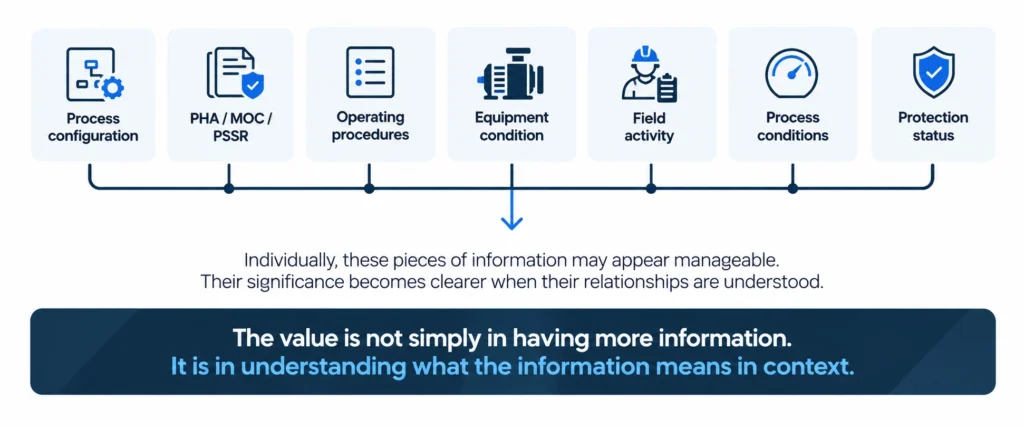
Information Across the Operation
The investigation considered information from multiple operational contexts:
This is a title
Applying the INJARO Approach
The following is an applied examination using INJARO's current methodology.
It is not a claim that INJARO investigated or intervened in the historical event.
Operational Risk Diagnostic
What conditions increased exposure, vulnerability, or consequence potential?
Human exposure, operating conditions, asset characteristics, environmental conditions, and critical controls can be examined together to identify where operational risk accumulates.
Process & Workflow Optimization
Where should critical information, verification, and escalation occur?
Dispatch, HOS, route conditions, information handoffs, verification points, and escalation mechanisms can be examined to strengthen the workflow surrounding safety-critical work.
Frontline Performance & Intervention
How can capability be strengthened when operating conditions change?
The focus is on the connection between capability, recognition, decision-making, intervention, follow-through, and learning.
HSA™
How can operational information be connected to make changing conditions more visible?
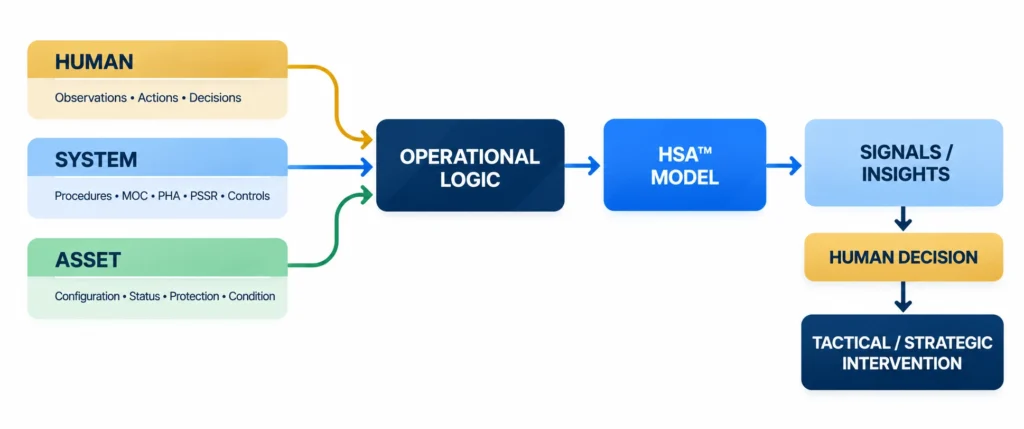
HSA™ connects relevant Human, System, and Asset information through operational logic to build a client-specific operational intelligence model.
Applied Operational Logic
Illustrative — derived from the investigation evidence, not a historical reconstruction.
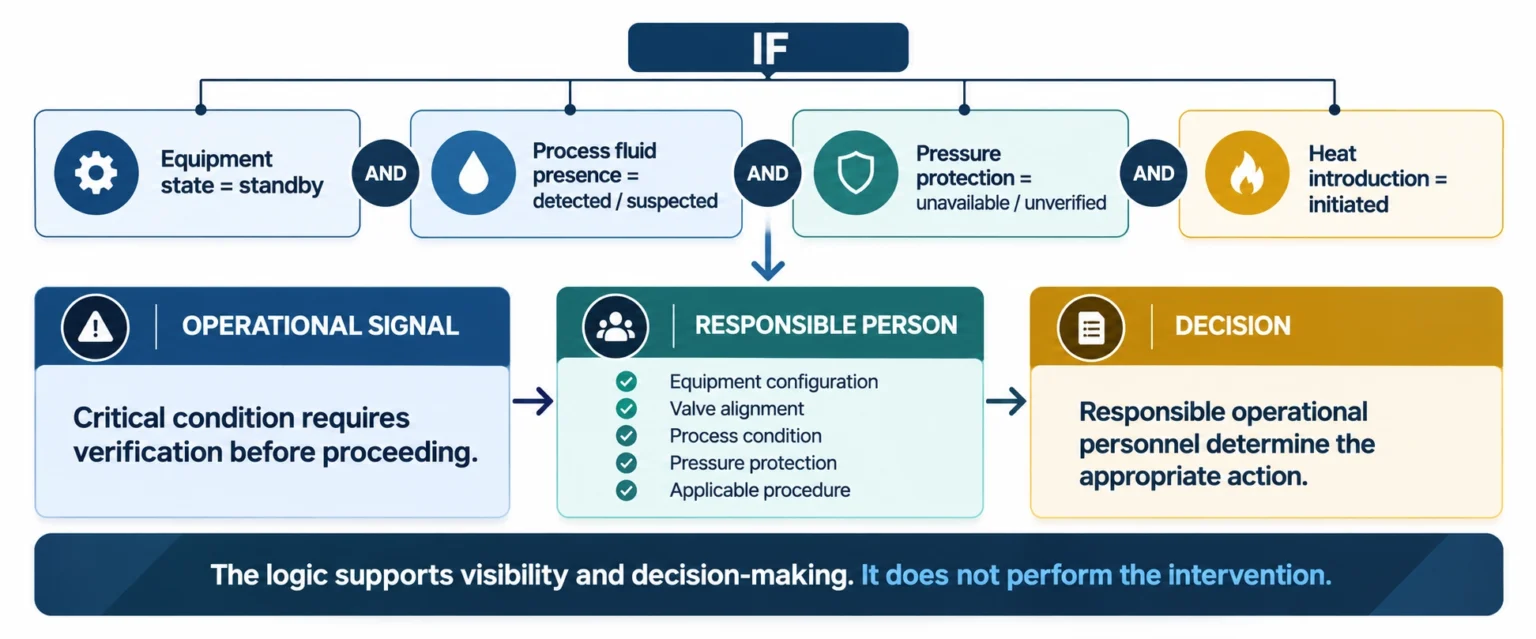
The logic is not the intervention.
It is a structured way to connect relevant conditions so that responsible people can determine whether action is required.
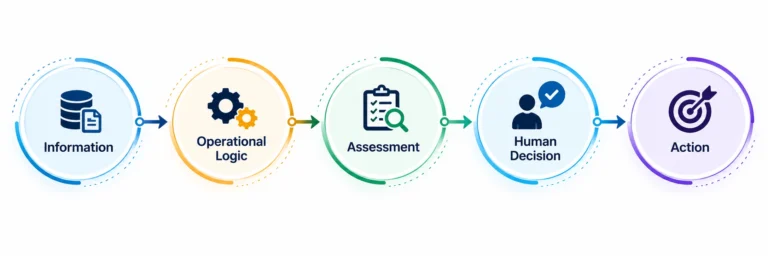
From Information to Operational Intelligence
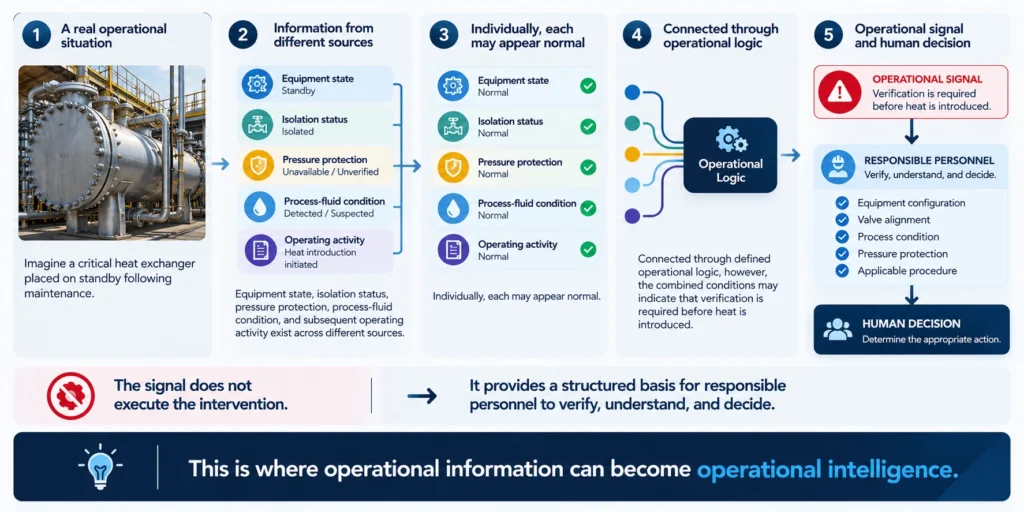
Operational information may already exist across.
The challenge is not simply having more information.
It is connecting relevant information through operational logic to understand what is happening, how conditions are changing, and what those relationships may mean.
HSA™ connects these relationships into an operational intelligence model.
The resulting signals and insights support responsible people in making informed decisions and determining the appropriate tactical or strategic intervention.
What an Applied Scenario Could Look Like
Illustrative - Not a Historical Reconstruction